Rothko Room Initiative
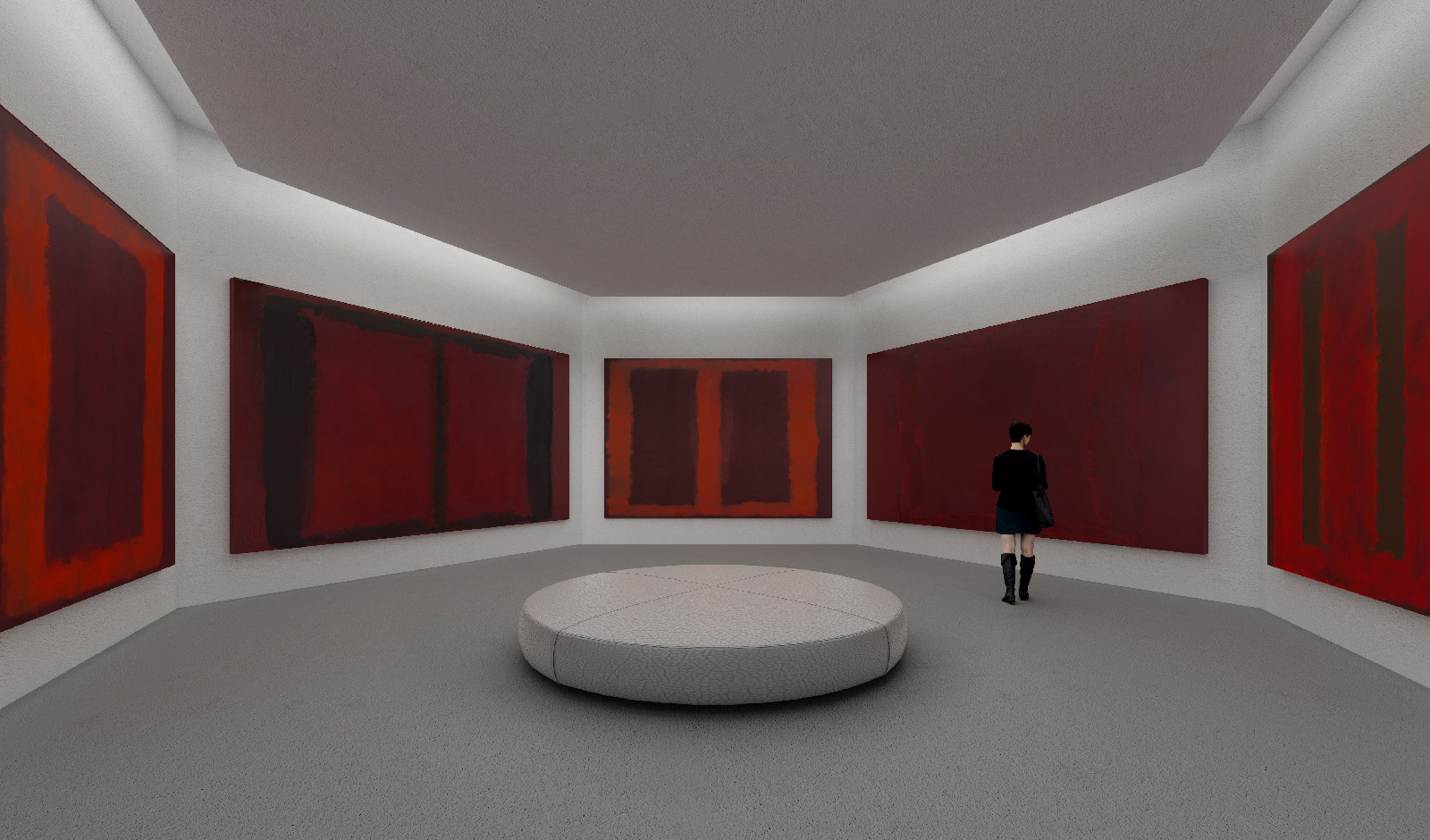
© 1998 Kate Rothko Prizel & Christopher Rothko / ARS, New York / JASPAR, Tokyo G4115
01 / DESIGN
"Rothko Room" Design Concept by Architectural Firm SANAA
The architectural firm SANAA, responsible for designing the permanent exhibition The "Rothko Room" in the International House of Japan's New West Wing, visited The Kawamura Memorial DIC Museum of Art, the Rothko Chapel in the United States, and the Tate Modern in the United Kingdom to deepen their understanding of the relationship between the artwork and its surrounding space.
The new"Rothko Room" symbolizes collaboration rooted in art and architecture. It highlights the unique environment in which the International House of Japan's unparalleled Japanese modernist architecture harmonizes with its modern Japanese garden.
02 / Concept
Design Concept
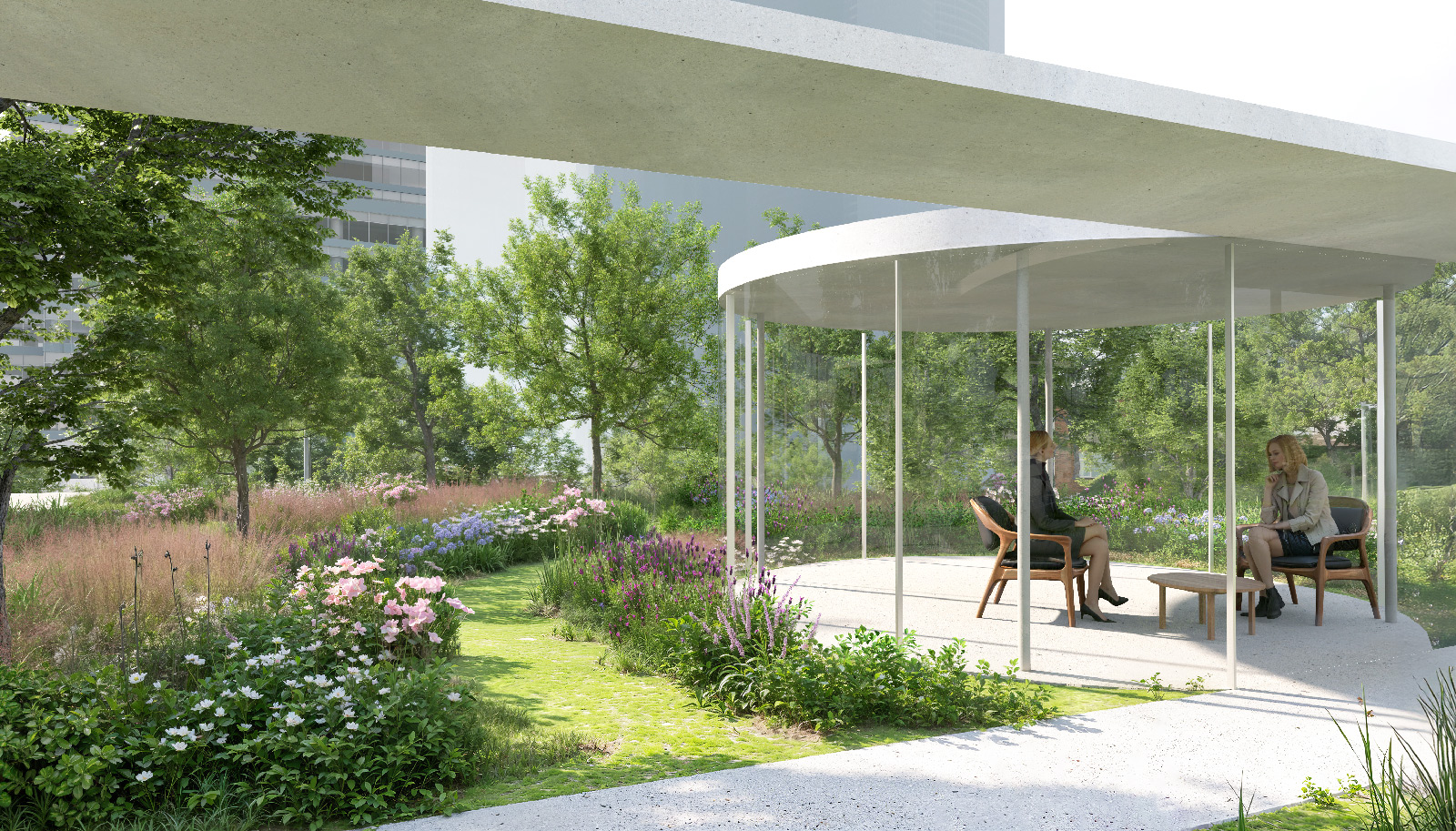
Approach from the Garden
Access to the "Rothko Room" will be through a newly created entrance hall surrounded by a lush garden, followed by the underground Meditation Space, designed to invite a sense of natural light. This design seeks to harmonize two key elements: the immersive, nature-oriented spatial experience at the heart of the International House of Japan's new West Wing, and the singular, self-contained spatial experience of the"Rothko Room"— and bringing them together into one continuous and cohesive flow.
© 1998 Kate Rothko Prizel & Christopher Rothko / ARS, New York / JASPAR, Tokyo G4115
An Independent Space Within the Exhibition Hall
The "Rothko Room" will be located within the underground gallery space. While maintaining continuity with the surrounding exhibitions, it is designed as an independent and self-contained environment. The aim is for the"Rothko Room" itself to possess a clear and distinctive presence, offering visitors a powerful and symbolic spatial experience.
03 / Architect
Architectural firm by Kazuyo Sejima and Ryue Nishizawa
SANAA is a Japanese architectural firm formed by Kazuyo Sejima and Ryue Nishizawa. Established in 1995, the firm has received high international acclaim for its light, transparent designs and architecture that harmonizes with the environment.
In 2010, they were awarded the Pritzker Architecture Prize, often referred to as the Nobel Prize of architecture. They have worked on numerous cultural facilities both in Japan and overseas, including the 21st Century Museum of Contemporary Art, Kanazawa, the Louvre-Lens (France), and the New Museum of Contemporary Art (New York).
Their works are known for a unique approach that blurs the boundaries between the interior and exterior—nature and architecture—providing visitors with new spatial experiences.
Messages
Message
We are truly honored to have been given the opportunity to participate in the design of the "Rothko Room" which will display the Seagram Murals, as part of the International House of Japan's New West Wing construction project. We will proceed with the design to create a serene exhibition environment where visitors can deeply engage with the artwork.
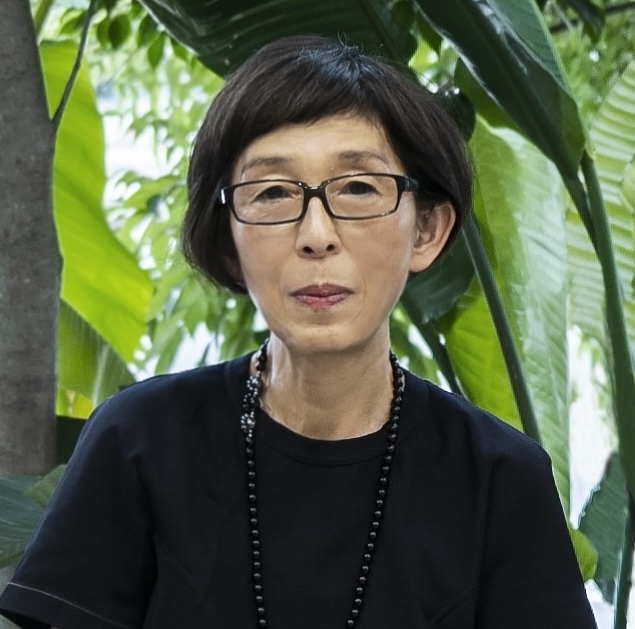
Kazuyo Sejima
Kazuyo Sejima
Kazuyo Sejima was born in 1956 in Ibaraki and studied architecture at Japan Women’s University. In 1987, she opened her own studio, Kazuyo Sejima & Associates, and in 1995, together with Ryue Nishizawa, founded SANAA. She is currently a professor at the Polytechnic University of Milan, a visiting professor at Japan Women’s University and the Osaka University of Arts, an emeritus professor at Yokohama National University, and director of the Tokyo Metropolitan Teien Art Museum. Major works include Saishunkan Seiyaku Women’s Dormitory, House in a Plum Grove, the Inujima Art House Project, the Sumida Hokusai Museum, and Japan Women’s University Mejiro Campus.
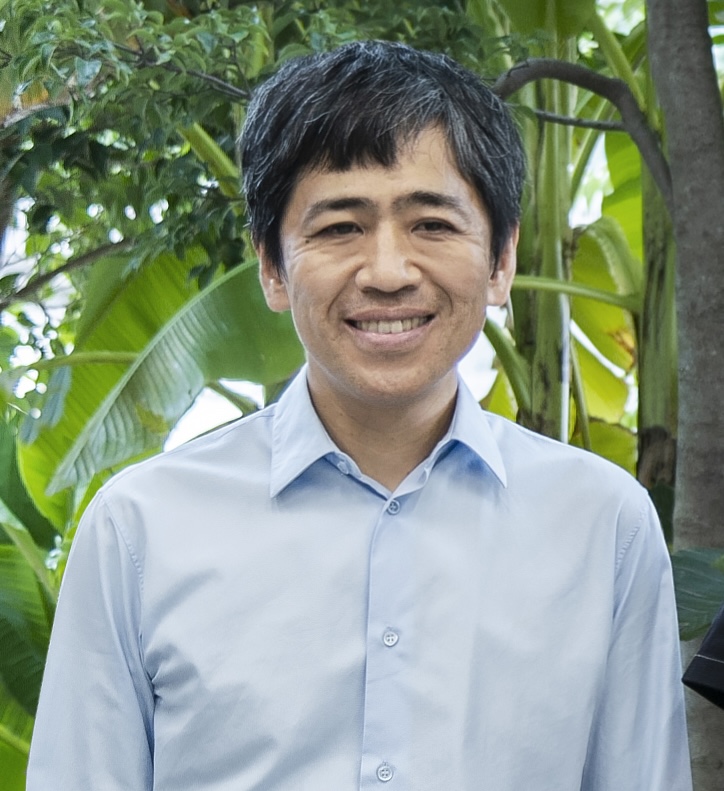
Ryue Nishizawa
Ryue Nishizawa
Ryue Nishizawa was born in 1966 in Tokyo and studied architecture at Yokohama National University. In 1995, he opened SANAA with Kazuyo Sejima, and in 1997 he founded the Office of Ryue Nishizawa. He is currently a professor at the Yokohama Graduate School of Architecture (Y-GSA). Major works include Moriyama House, House A, the Towada Art Center, the Teshima Art Museum, and Hiroshi Senju Museum Karuizawa.
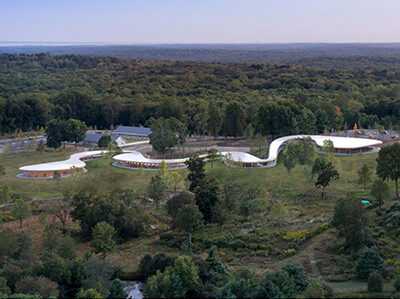
Grace Farms. Photo: Iwan Baan
SANAA
Recipient of numerous prestigious awards, including the Golden Lion at the 9th International Architecture Exhibition – La Biennale di Venezia (2004), the Pritzker Architecture Prize (2010), and the Praemium Imperiale in Honour of Prince Takamatsu, Architecture Category (2022). Major works include the 21st Century Museum of Contemporary Art, Kanazawa; the New Museum, New York (USA); the Rolex Learning Center at EPFL (Switzerland); the Louvre-Lens (France); Grace Farms (USA); Shogin TACT Tsuruoka (Japan); the Bocconi University New Campus (Italy); La Samaritaine (France); the Art Gallery of New South Wales, Naala Badu Building (Australia); Kagawa Prefectural Arena (Japan); and Taichung Green Museumbrary (Taiwan).
04 / CULTURE NETWORK
Partnership with Rothko Chapel
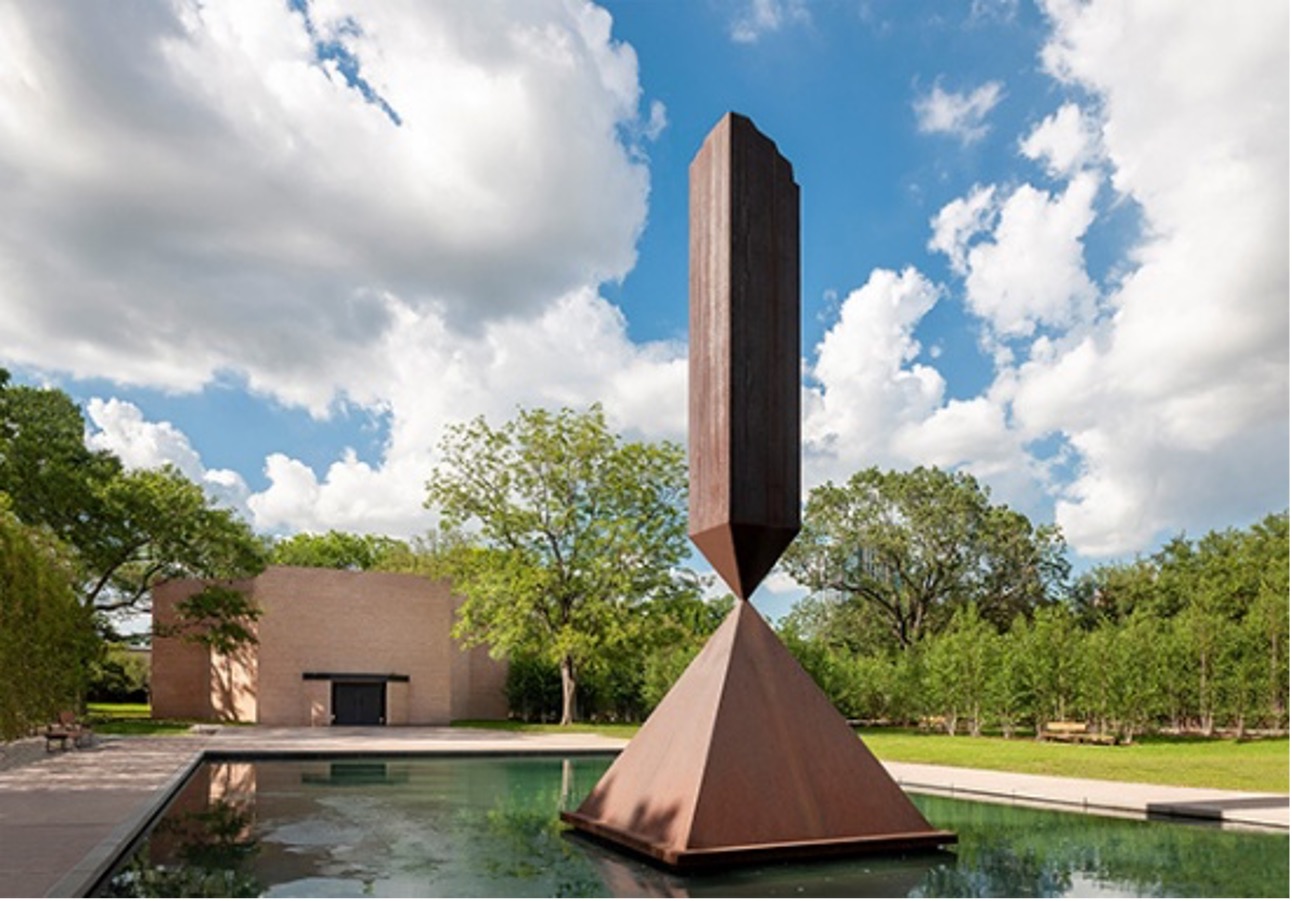
Rothko Chapel
DIC and the International House of Japan have each entered into a partnership agreement with the Rothko Chapel, a non-denominational chapel established in 1971 in Houston, Texas. The Chapel permanently houses fourteen paintings created by Mark Rothko in the final years of his life.
Internationally acclaimed, the Rothko Chapel transcends religious, cultural, and national boundaries, serving as a space that fosters introspection, dialogue, and reconciliation through art. It also plays a globally significant role as a center for initiatives addressing social transformation, human rights, and peace.
Through this partnership, each institution will collaborate with the Rothko Chapel—recognized as a central hub for Mark Rothko in the United States—and build a cultural network that extends internationally.