
01 / Role
The Role of the International House of Japan
Toward Becoming a Leading Hub for Intellectual Exchange in the Asia-Pacific Region
The International House of Japan was established in 1952 as a private, non-profit organization. Founded in the immediate postwar period and based on the reflection that the outbreak of war between Japan and the United States stemmed from a lack of mutual understanding, it was created as a venue for international academic exchange, seeking to foster mutual understanding between the people of Japan and the world through cultural exchange and intellectual cooperation.
The main building was constructed in 1955 through the joint design of three leading figures of Japanese modern architecture: Kunio Maekawa, Junzo Sakakura, and Junzo Yoshimura. Its traditional presence—harmonizing with the Japanese garden created in 1930 by Ogawa Jihei VII (known as "Ueji"), one of Japan's most distinguished landscape architects, at the request of Koyata Iwasaki, the fourth president of the Mitsubishi zaibatsu—has been highly acclaimed. The main building was designated a Registered Tangible Cultural Property by Japan's Agency for Cultural Affairs in 2006, and the garden was designated a Scenic Site by Minato City in 2005.
The New West Wing, designed by Pritzker Prize–winning architectural firm SANAA and scheduled for completion in 2030, will expand public-interest programs in both the Think Tank Division and the Art & Design Division. Following this redevelopment, the International House of Japan will further strengthen its function as a salon that promotes intellectual dialogue and cultural exchange.
By developing a diverse and inclusive network that extends across the Asia-Pacific region, the organization seeks both to return to its founding mission of intellectual exchange with people around the world and to realize its vision of becoming a leading hub for intellectual exchange in the Asia-Pacific region.
As a pioneer of private diplomacy and international cultural exchange, the International House of Japan aims to further enhance its global outreach in the fields of art and architecture. Through the creation of new artistic and cultural experiences, it will communicate the social value of art to the international community.
02 / NEWS
News
P.1参照
February 5, 2026
DIC and the International House of Japan Launch Full-Scale Collaboration in Art and Architecture, Entering Deepening Phase
The two parties announced the conclusion of their collaboration agreement, and that the architectural firm SANAA will design the "Rothko Room".
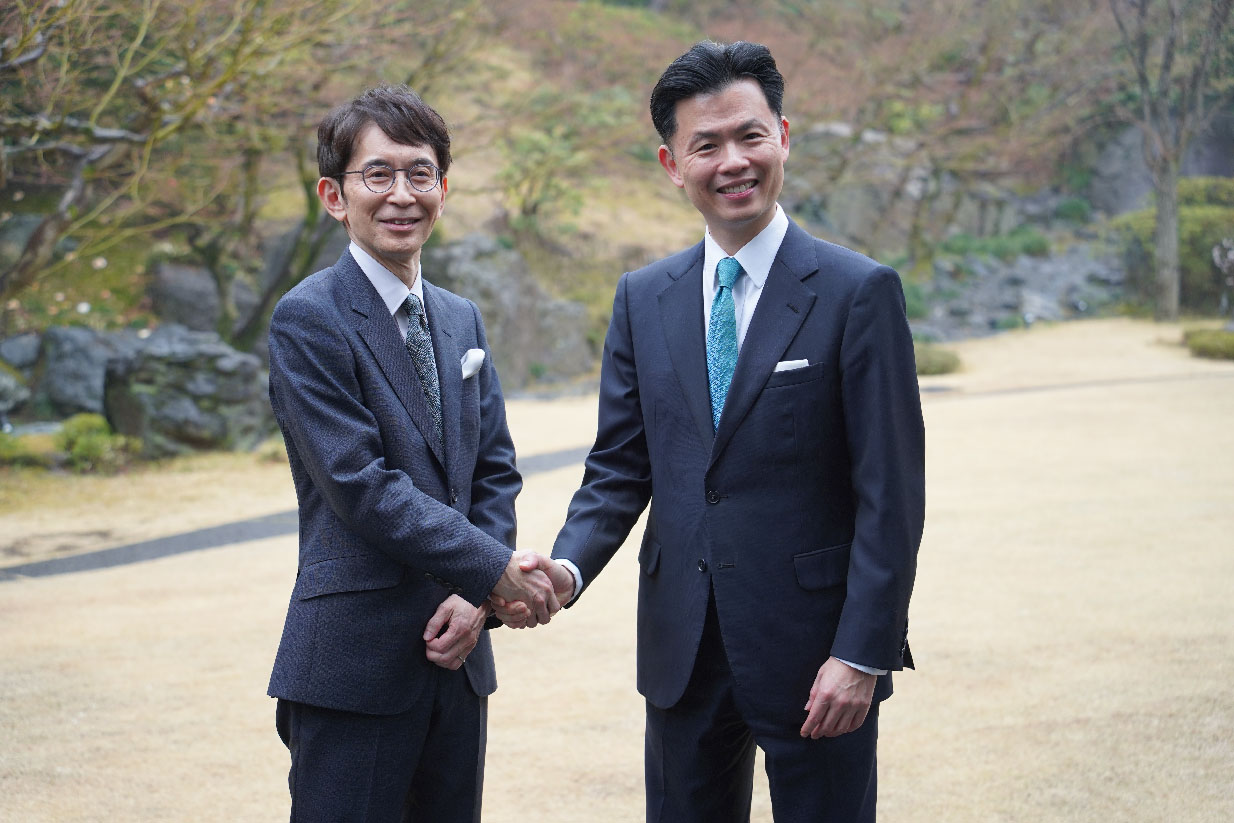
March 12, 2025
DIC and the International House of Japan Agree to Collaborate in Various Fields, Beginning with the Visual Arts and Architecture
The two parties announced the conclusion of their collaboration agreement, and that the architectural firm SANAA will design the "Rothko Room".
03 / Joint Planning of International Programs
The International House of Japan will collaborate with the Rothko Chapel to advance private diplomacy for the promotion of peace. The two organizations will jointly establish an advisory body to plan and implement programs, while expanding their collaboration to like-minded organizations around the world.
04 / ABOUT I-HOUSE
About the International House of Japan
The International House of Japan has been a pioneer in private diplomacy and international cultural exchange in Japan. Since its establishment in 1952, it has consistently contributed to the peace and prosperity of Japan and the AsiaPacific region. Its mission is to "contribute to building a free, open, and sustainable future through intellectual dialogue, policy research, and cultural exchange with a diverse world," and its vision is to "become a hub for intellectual exchange in the Asia-Pacific region."
The main building of the International House of Japan, a registered tangible cultural property, is a notable example of modernist architecture, while its garden, designed by Ogawa Jihei VII, is considered a masterpiece. The forthcoming West Wing, designed by Pritzker Prize-winning architects SANAA, will expand public-interest programs in the Think Tank and Art & Design departments.